Modernizing Workforce Strategy Beyond Major Health Systems
Panelists
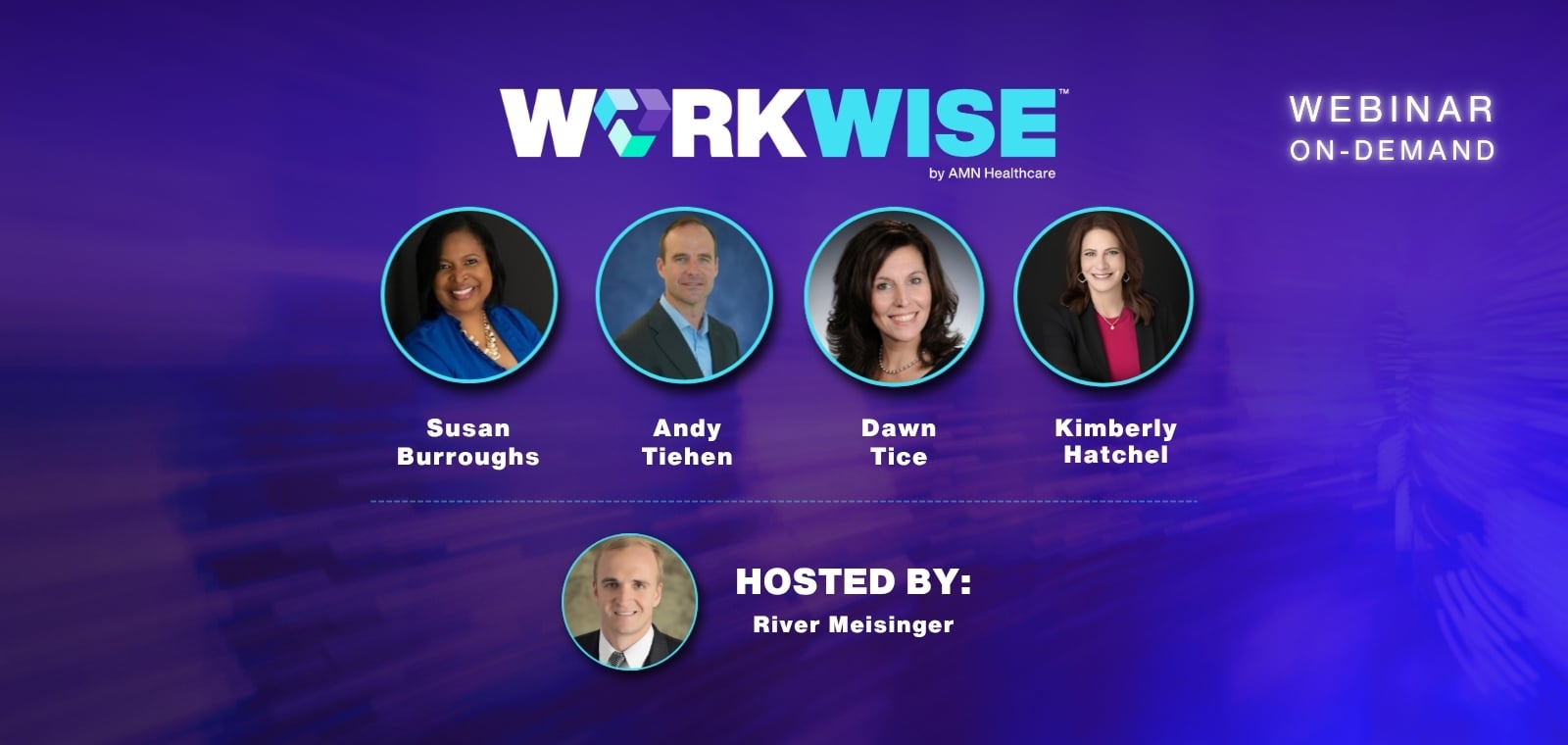
- Susan Burroughs, MHA, FACHE, Chief Operating Officer, Wilson Medical Center – A Duke LifePoint Hospital
- Dawn Tice, MBA, Chief Operating Officer, Mount Nittany Physician Group
- Andy Tiehen, MBA, Associate Chief HR Officer, Denver Health
- Kimberly Hatchel, DNP, CENP, Senior VP Bronson Healthcare Group and Chief Operating Officer Bronson Methodist Hospital
Host
- River Meisinger, HCMBA, VP of Enterprise Solutions, AMN Healthcare | WorkWise
Brief Summary
Workforce challenges are no longer limited to large health systems. Rural hospitals, regional providers, and community-based organizations face many of the same staffing shortages, financial pressures, and operational demands but often have fewer resources available to address them.
In this Marcus Evans panel discussion, operational leaders from Wilson Medical Center, Mount Nittany, Denver Health and Bronson Methodist Hospital share how they are modernizing workforce strategy to improve workforce visibility, strengthen labor sustainability, and make more informed staffing decisions across clinical and non-clinical departments.
The discussion explores how community and mid-sized healthcare organizations are leveraging workforce data, technology, and operational coordination to reduce dependency on reactive staffing models while maintaining patient access and continuity of care. Attendees will hear practical lessons from organizations that are building scalable workforce practices despite ongoing labor constraints and financial pressures.
Why Clients Should Care
Healthcare organizations today are being asked to simultaneously:
- Fill critical workforce gaps amid ongoing labor shortages
- Reduce dependence on contingent labor and premium agency spend
- Improve retention and workforce engagement
- Maintain patient access despite resource constraints
- Support operational efficiency while protecting care quality
For rural hospitals, regional providers, and community health systems, these challenges can have an even greater impact on organizational sustainability.
This webinar provides healthcare executives with an opportunity to hear how peer leaders are responding to these realities, including:
- How workforce visibility supports better staffing decisions
- Ways organizations are leveraging workforce data without increasing administrative burden
- Strategies for reducing dependence on reactive staffing models
- Lessons learned while implementing scalable workforce practices
- Approaches for balancing labor sustainability with patient access and financial performance
Strategic Value for Clients
- Peer-driven insights from healthcare operators facing similar workforce challenges
- Practical examples from community and regional healthcare organizations
- Executive-level perspectives on workforce modernization and labor sustainability
- Actionable ideas that support workforce planning, retention, scheduling, and labor optimization efforts
- Credibility-building content for conversations around workforce technology and enterprise workforce strategy
This content is especially relevant for CEOs, COOs, CFOs, CHROs, CNOs, physician group executives, operations leaders, and workforce strategy stakeholders.
Key Discussion Themes & Takeaways
Workforce visibility is becoming a competitive advantage
Organizations are seeking greater visibility into workforce resources across departments, sites, and care settings to support more proactive staffing decisions.
Reactive staffing models are becoming increasingly unsustainable
Healthcare leaders are evaluating new approaches that improve workforce planning and reduce dependence on last-minute labor solutions.
Technology should simplify workforce management
Successful organizations are using workforce technology and data to improve decision-making without creating additional administrative burden for leaders and staff.
Workforce sustainability directly impacts patient access
Staffing decisions increasingly influence organizations' ability to maintain access, support growth, and deliver consistent patient care.
Community providers require scalable workforce strategies
Smaller organizations need workforce solutions that deliver meaningful results without requiring large health-system infrastructure or resources.
Continuity of care depends on workforce stability
Reducing unnecessary turnover and labor disruption remains a critical component of delivering high-quality patient care.
How to Use This with Clients
Retention Accounts
- Use as a strategic check-in with clients evaluating workforce sustainability initiatives.
- Start conversations around agency utilization, retention, scheduling, and workforce visibility.
- Share with executives responsible for workforce planning and labor management.
- Reinforce AMN's role as a strategic advisor beyond staffing services.
- Support discussions around workforce technology and enterprise workforce optimization.
Acquisition Accounts
- Share early in the buying journey to establish credibility.
- Use as peer-driven content that validates workforce challenges are industry-wide.
- Demonstrate AMN's understanding of the unique realities facing community and regional providers.
- Create opportunities to discuss workforce modernization strategies.
- Position WorkWise and AMN as partners focused on long-term workforce transformation.