

What Float Pool Nurses Really Experience and Retention Strategies That Work
Hospital float pools give you flexible internal coverage, which is why retaining float nurses is top of mind for most hospital leaders. Building a supportive float pool starts with fostering belonging, preparing nurses for assignments, and offering scheduling flexibility. This approach brings leadership, competency validation, scheduling, and technology together in a coordinated retention strategy.
This article explores practical ways to put that strategy into action, with a focus on nurse safety, satisfaction, and a reliable internal workforce.
Understanding Float Pool Nursing and Its Challenges
Float pool nurses work across multiple units to cover census changes, absences, and seasonal demand. Well-designed programs reduce overtime and agency reliance while giving your organization greater staffing flexibility.
Poorly designed programs, on the other hand, create role ambiguity, inconsistent expectations, isolation, and burnout. Understanding what float nurses experience day to day is the first step toward a program that works for them and for you.
Key Experiences of Float Pool Nurses
The Fischer et al. "Stretching Boundaries" study identified five recurring float nurse experiences:
- Feeling like an outsider
- Anxiety about competency
- Appreciation for clinical variety
- Stress from rigid scheduling
- Stronger engagement when leaders are visible and supportive
Together, these findings show that float pool retention depends on more than filling shifts. You also need to create belonging, validate skills, provide scheduling flexibility, and support long-term career growth.
Leadership and Belonging Support for Float Nurses
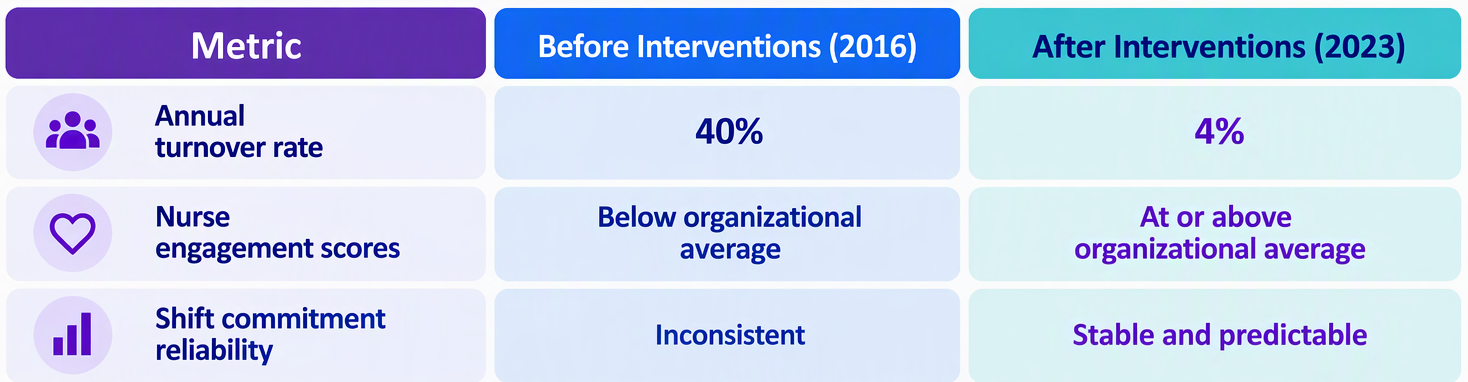
According to Nursing Management, leadership can directly improve retention. Daily rounding helps managers identify problems quickly and shows float nurses they are valued. Clinically experienced managers can discuss acuity, skill gaps, and development rather than relying on administrative check-ins. Shared leadership, recognition, and buddy programs also give float nurses a consistent team identity, even as their assignments change. The results below show how focused interventions can improve turnover, engagement, and shift reliability.
Ensuring Skills, Safety, and Competency Validation
Float nurses should not work independently on units where their competency has not been validated. A clear process helps protect both your nurses and your patients. It should:
Document current skills
Provide unit-specific orientation
Pair nurses with a preceptor for initial shifts
Require formal sign-off
Reassess competency when protocols change
Conservative patient ratios during the first few shifts and paid cross-training further strengthen safety and confidence. When nurses feel prepared, they deliver better care and are more likely to stay.
Scheduling Flexibility and Equitable Workload Distribution
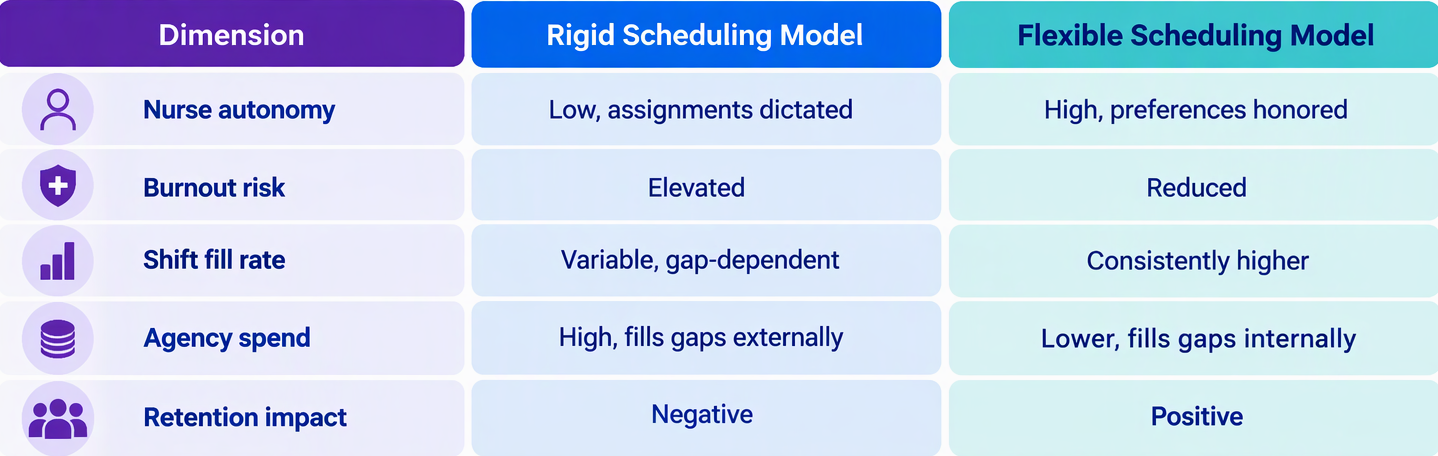
Scheduling is one of the strongest drivers of burnout and retention. You can give nurses more control by letting them indicate preferred units, shifts, and frequency. Transparent cancellation rules, such as first-in, first-out, and paid standby options also build trust.
Including PRN, part-time, moonlighting, and semi-retired clinicians can expand your coverage without adding full-time roles or relying on agency staffing.
Enhancing Communication and Career Development Pathways
Because float nurses rarely work together in one place, communication must be intentional. Daily leader rounding, inclusion in unit huddles, monthly float team meetings, recognition, and annual career reviews create connection and surface concerns early.
Paid certifications, cross-training, and visible paths into charge, educator, or manager roles help make the float pool a career path rather than a temporary stop. When nurses see a future, they invest in it.
Implementing Person-Centered Float Pool Design
A 2025 study of hospital nurses in the Journal of Nursing Management makes the case for person-centered float pool design, which tailors scheduling, assignments, support, and development to each nurse’s skills and preferences. The checklist below focuses on four essentials: scheduling input, validated competency, transparent pay, and psychological safety. Nurses in that study valued schedule flexibility, and those anticipating float work expected rewards and compensation. Nursa, a nurse staffing platform, recommends validating competency before independent assignment, with conservative ratios during a nurse’s first three shifts on a new unit. Early evidence from a 2026 doctoral project at San José State University also suggests that a structured buddy program may strengthen float nurses’ sense of connection and support. Used together, these practices are designed to reduce ambiguity, build trust, and support retention.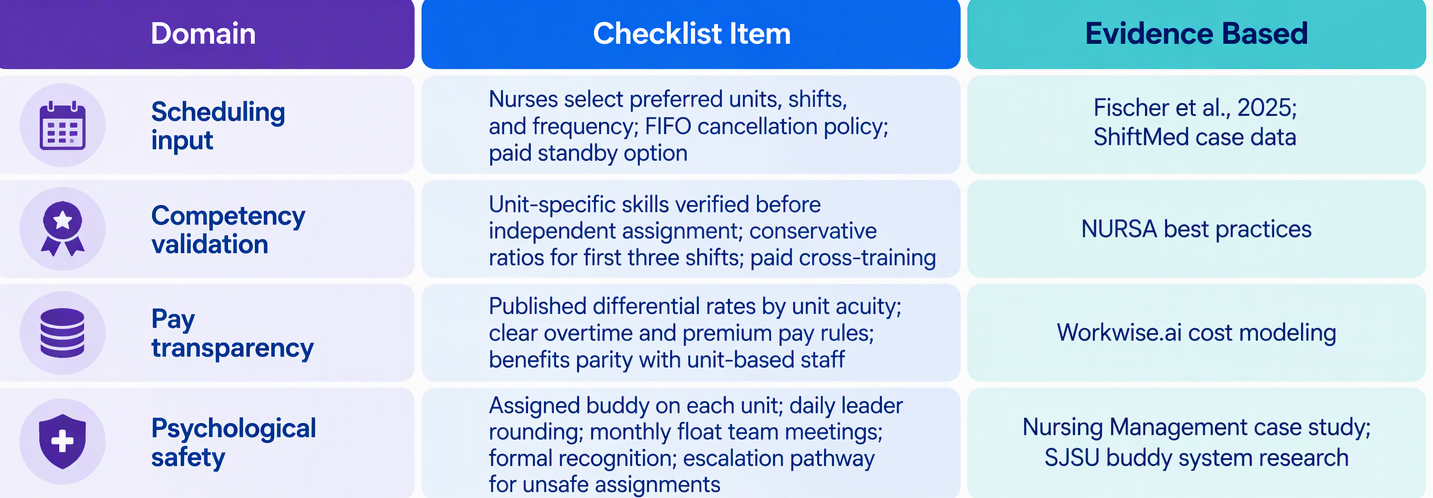
Benefits of Technology in Float Pool Management
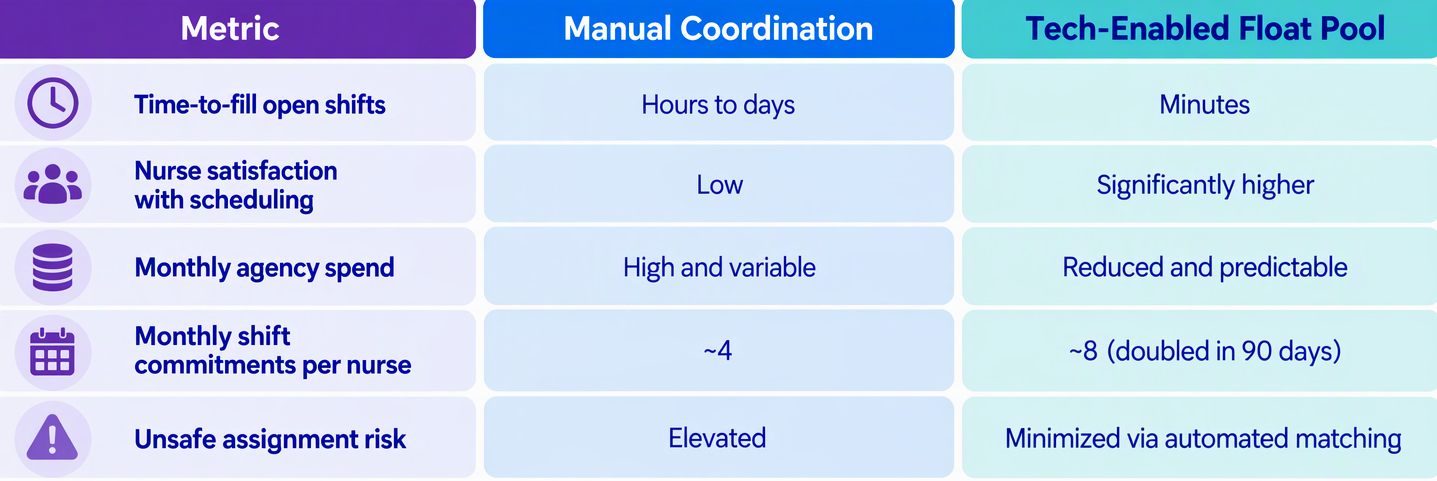
Technology makes person-centered design easier to scale across your organization. Centralized platforms can show open shifts in real time, let nurses voluntarily claim work, match competencies to unit needs, and model internal labor costs against agency use. For nurses, that means more choice and safer assignments. For leaders, it means clearer visibility and more predictable spending.
At UNC Health, real-time visibility and control helped double monthly commitments from four to eight shifts per nurse in 90 days.
Request Demo
Frequently Asked Questions
What Is a Hospital Float Pool?
A hospital float pool is an internal group of clinicians who work across units based on staffing needs, census changes, and their validated competencies.
How Can Hospitals Improve Float Nurse Retention?
You can improve retention through flexible scheduling, competency-based assignments, visible leadership, fair pay practices, stronger team connection, and clear career development.
How Does Technology Support Float Pool Management?
Workforce technology can provide real-time shift visibility, automate skills matching, and simplify scheduling. It also helps leaders compare internal staffing costs with agency use.